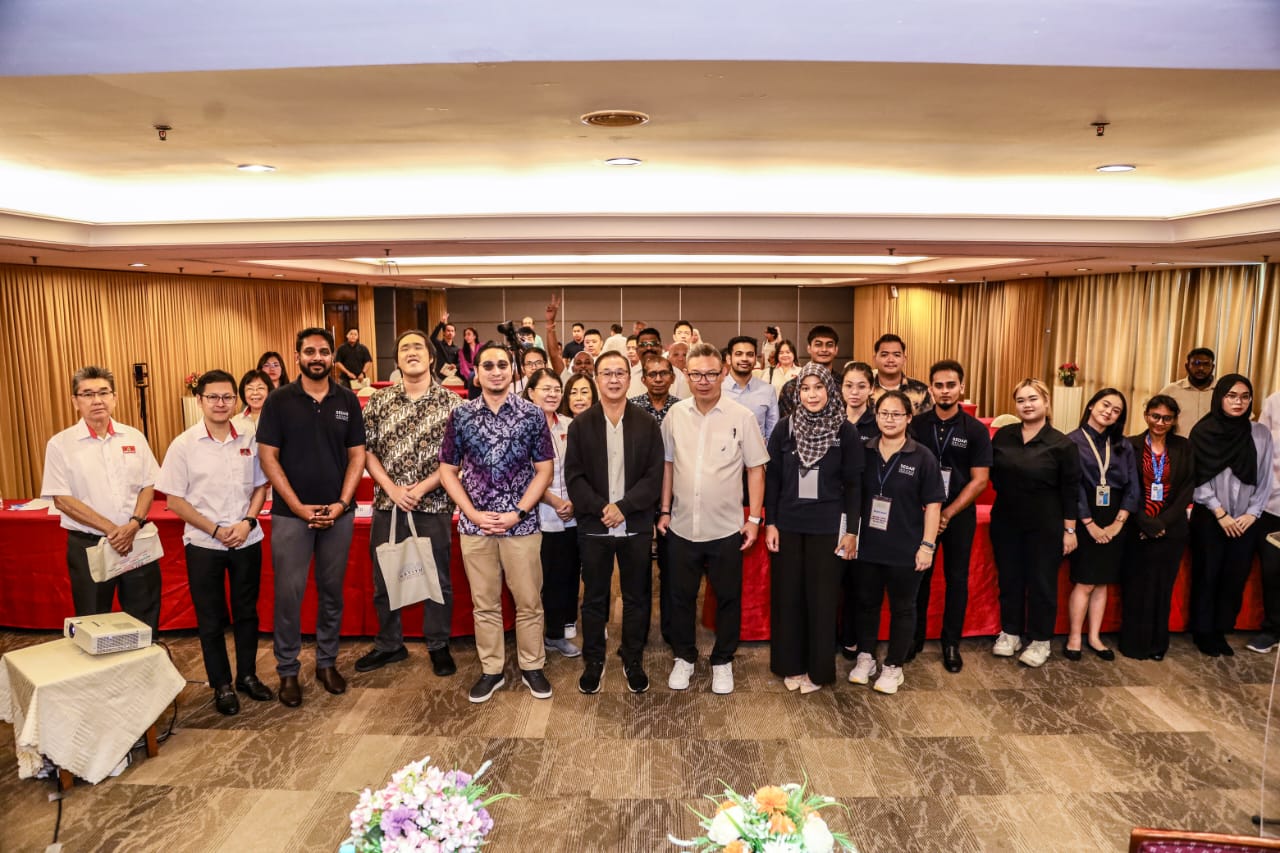
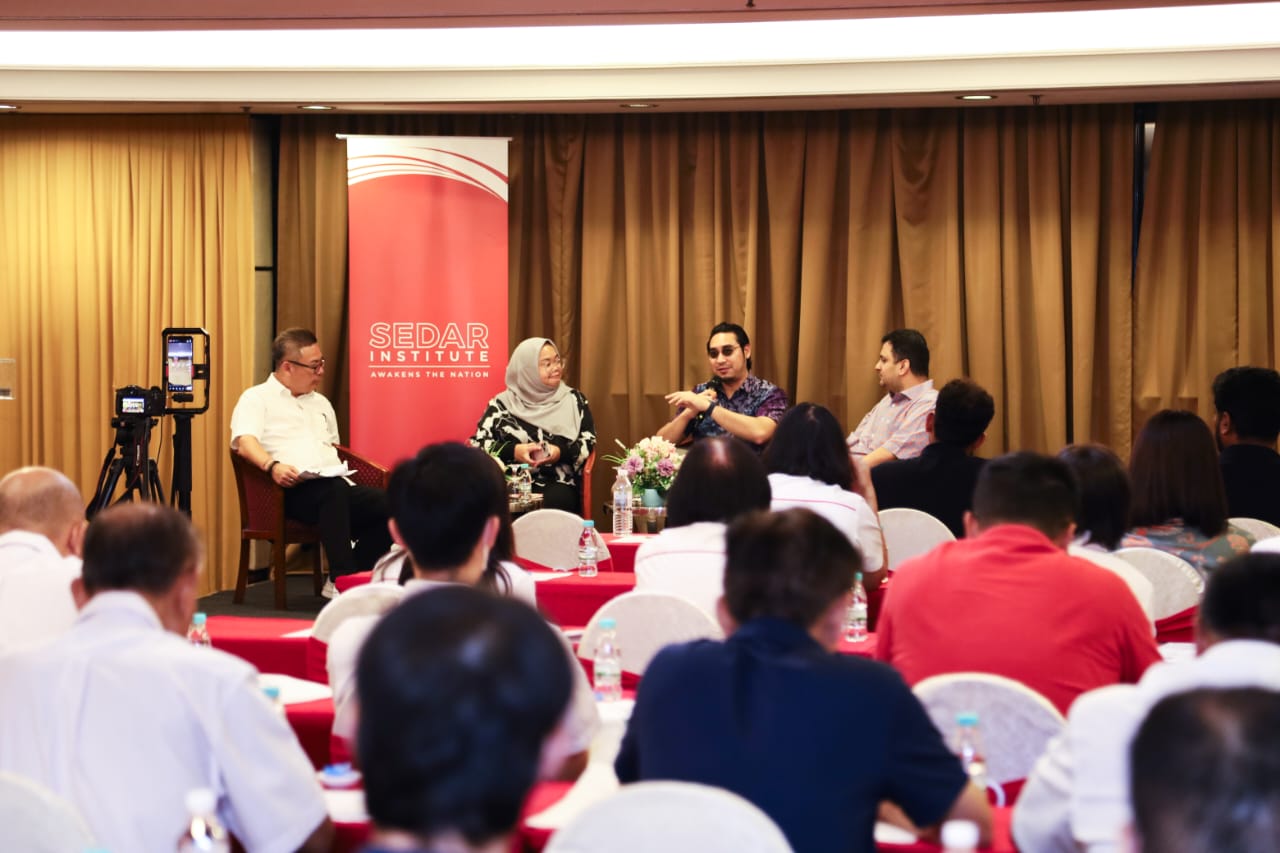
On 19 July 2025, SEDAR Institute hosted a panel discussion titled “Reform, Youth and New Politics in Malaysia.” The event featured three prominent panelists: YB Amira Aisya Abdul Aziz (Acting President of Malaysian United Democratic Alliance, MUDA), YB Wan Ahmad Fayhsal (Supreme Council Member of Malaysian United Indigenous Party, BERSATU), and Sdr. Ivanpal Singh Grewal (Member of the SEDAR Board of Advisors). The discussion was moderated by Chai Ko Thing, the Director of SEDAR Institute.
With the participation of political leaders, youth advocates, civil society members, and students, the discussion focused on the urgent need to include youth voices in shaping a more accountable and democratic future. It featured key topics such as institutional reform, student politics, Undi18, and the evolution of the nation’s political landscape for the next general election.
Panel Discussion Highlights
Youth
Starting the discussion, YB Amira Aisya Abdul Aziz said that youth are the “wild card” in elections, there is no exact data to prove their party loyalty, and they are open to the opportunities that every political party offers. YB Wan Ahmad Fayhsal, however, observed that these first-time voters are heavily influenced by their parents due to their disinterest in political topics, and he believes this trend will persist in the next general election.
All three panelists have agreed on the point that youth have faced challenges in leading the political narratives. Sdr. Ivanpal Singh Grewal emphasized the deeply structured issue in Malaysia’s politics: ageing leadership. According to him, the majority of national leaders today are products of the political culture of the 1970s and 1980s, which no longer aligns with the realities of a modern, youthful Malaysia. This ageing landscape has left little room for youth to express and develop their political aspirations. YB Amira Aisya Abdul Aziz stated that in order to empower youth, political parties should not only place them in youth wings, but must also have faith and space for the youth to be in the central committee of the parties.
Citing the growing usage of social media, YB Wan Ahmad Fayhsal pointed out its significance as a key platform for oppositions to engage with the rakyat, especially the young voters. He explained that due to unequal access to mainstream media and educational institutions, opposition parties often struggle to gain visibility through traditional channels, making social media an essential tool for outreach. He also highlighted Parti Islam Se-Malaysia (PAS) has successfully gained influence by its tremendous efforts in digital campaigning.
Reform
The moderator highlighted the Universities and University Colleges Act (AUKU) and the Peaceful Assembly Act as two key laws that require substantial amendments to strengthen youth political participation in Malaysia. YB Amira Aisya Abdul Aziz voiced her disappointment over the recent detention of students involved in the “Himpunan Gempur Rasuah” rally in Sabah, criticising the government’s lack of effort in protecting the constitutional right to peaceful assembly.
YB Wan Ahmad Fayhsal noted that although AUKU has been amended to permit students to participate in political party activities within university and college campuses, the government appears to lack in political will to uphold its promises. He pointed out that even non-partisan artist-activist Fahmi Reza was barred from entering public universities to deliver talks aimed at promoting political literacy among youth.
The moderator also raised the issue of unequal constituency allocations to opposition political representatives. All three panellists agreed that equitable allocation of constituency resources is a key component of a functioning democracy, as it ensures that all elected representatives, regardless of party affiliation, have equal means to serve their constituents effectively. Sdr. Ivanpal Singh Grewal also emphasized the need for a Political Financing Act, noting that government funding for political parties during elections must be regulated and transparent.
New Politics
Wrapping up the discussion, the panellists reflected on the evolving nature of Malaysian politics. All three panellists expressed hope for more youth to take the lead in shaping political narratives by transcending racial politics and shifting the focus toward more substantive issues such as the economy, climate change, education, and nation-building. YB Amira Aisya Abdul Aziz remarked that the current political landscape, while often confusing, is a sign of a healthy democracy. She emphasised that democracy does not offer straightforward answers, and that the ongoing process of political contestation and reform should continue. Sdr. Ivanpal Singh Grewal argued that Malaysians should avoid having a government with an overwhelming majority. Instead, he advocates for a more balanced system where no single party holds unchecked power, and governing coalitions are formed through negotiation and compromise. He noted that such a system encourages inclusivity, as policies were formed on the basis of consensus rather than a unilateral rule.
Q&A Session
A Q&A session was held following the discussion. One of the participants has raised a question on how youth organisations can protect their members from legal risks while preserving their right to freedom of expression, citing recent defamation suits faced by young political activists. In response, YB Amira Aisya Abdul Aziz stressed the importance of political parties not only organising campaigns and forums, but also equipping their members with legal literacy. At the same time, she acknowledged that the existence of a law does not necessarily make it just, some laws should be challenged and amended to better uphold fundamental rights and democratic freedoms.
Sdr. Ivanpal Singh Grewal also suggested that the Defamation Act should be amended to raise the threshold for defamation claims involving public figures. He argued that public figures, especially politicians, should not expect the same level of protection as normal citizens when they enter the political arena, as they must be prepared to accept greater public scrutiny and criticism. He also suggested including a legal concept of general public interest defense in the Defamation Act, to allow someone who makes a potentially defamatory statement to avoid liability if they can show that the subject of the statement was of public interest.
Another participant also raised concerns about funding to hire political staff, noting that young staffers often face low pay and long hours. Sdr. Ivanpal Singh Grewal cited the practice in Germany, where the government allocates public funds to political parties based on the number of seats they win in Parliament. YB Wan Ahmad Fahsyal also mentioned that the opposition has faced challenges in raising this issue in the Parliament when the Parliamentary Services Bill was tabled. He pointed out that the government is uninterested in referring the bill back to the selected committee for improvements, such as including provisions for Constituency Development Funds.
The final question is on how Semenanjung political leaders are working to consolidate national unity. YB Amira Aisya Abdul Aziz responded that there is a need to revisit the social contract, as Malaysia’s current social construct has evolved significantly since independence. She expressed concern over the long-standing fearmongering toward non-Malays, adding that political parties must move beyond racial politics and allow non-Malays the space to be vocal on issues that transcend ethnicity. Sdr. Ivanpal Singh Grewal also suggested that the education system should move toward a single-stream model to provide a shared environment where all Malaysians can build mutual understanding.
Disperse
The discussion concluded with a keynote address by Datuk Dr. Dominic Lau Hoe Chai, National President of Parti Gerakan Rakyat Malaysia and Advisor of SEDAR Institute.